
Rethinking Glass Facades in a Warming World

Reading Time: 5 min
Author: Purva Veera, Project Coordinator (EC)
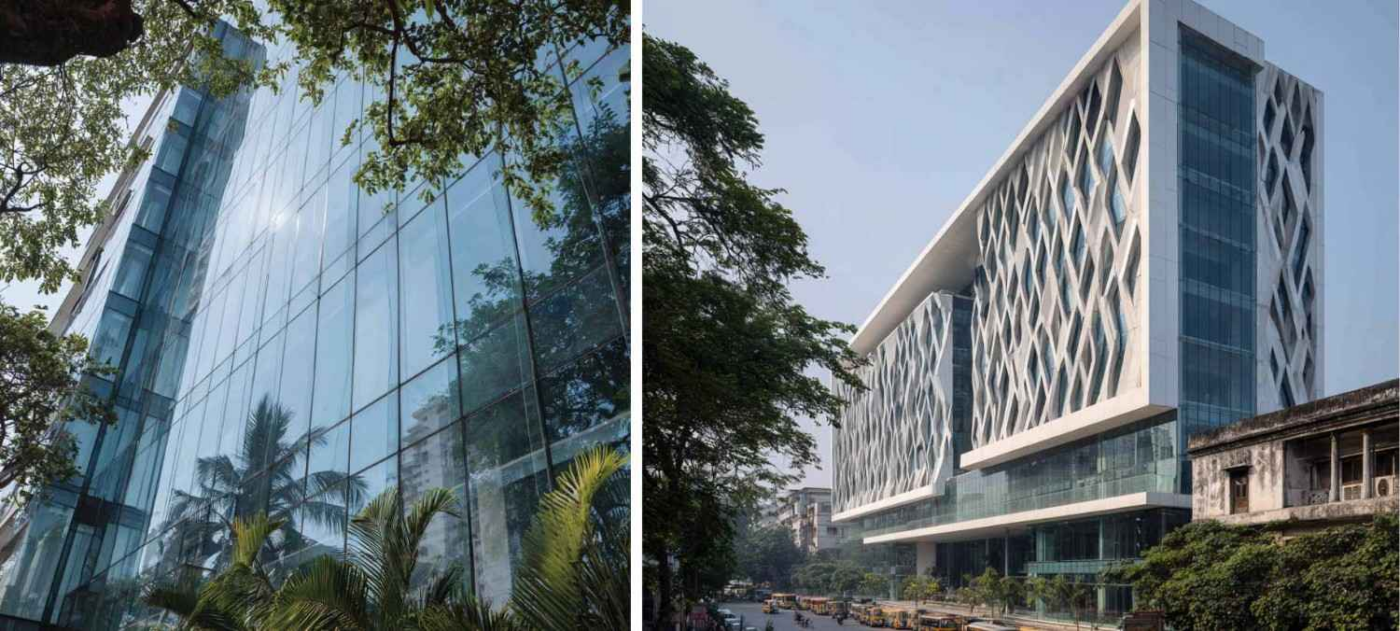
Glass facades have become a visual shorthand for modern architecture. Sleek, reflective and seemingly “light”, they dominate skylines across global cities and are often associated with innovation, prestige, and openness. Yet behind this aesthetic appeal lies a growing environmental concern that is increasingly difficult to ignore. In climates like India’s where heat, solar intensity and cooling demand already place a pressure on energy systems, extensive use of glass facades can significantly undermine a buildings performance.
This blog explores why glass-heavy buildings often perform poorly from a sustainability perspective and how facade orientation plays a crucial role in reducing or amplifying that impact.
The Environmental Reality of Glass Facades in Modern Buildings
At first glance, glass seems like a clean, efficient material. It allows daylight into interiors, reduces dependence on artificial lighting during the day, and creates visually open spaces. However, its thermal behavior tells a different story. Unlike solid walls, glass has limited insulation capacity. This means it readily transfers heat between the interior and exterior environment.
In hot climates, this translates into excessive heat entering the building envelope, forcing air-conditioning systems to work harder and longer. Since cooling loads already dominate energy consumption in commercial buildings, this becomes a major driver of operational carbon emissions. There is also the issue of solar heat gain. Sunlight entering through glass does not simply “light up” a space, it also brings in infrared radiation, which accumulates as heat. The result is a greenhouse effect inside the building, particularly pronounced during peak daylight hours. Even when advanced glazing systems like low-emissivity (low-E) glass are used, they only reduce but do not eliminate this effect. In practice, large glass facades still tend to increase overall energy demand.
Another often overlooked issue is glare. Excessive daylight penetration can make interiors uncomfortable, forcing occupants to draw blinds or curtains. Once that happens, the intended daylight benefit is lost and artificial lighting is switched back on. This creates a paradox where glass increases both cooling and lighting energy consumption.
Why Orientation Matters More Than Material Alone?
The environmental performance of a glass facade is not only about how much glass is used, but also where it is placed. Solar exposure changes dramatically depending on building orientation and in warm climates, this difference becomes critical. A poorly oriented glass facade can multiply cooling loads, while a well-oriented one can significantly reduce them. Understanding this relationship is essential for climate responsive design
East-Facing Glass: Morning Heat and Early Energy Load
East-facing facades receive low-angle morning sunlight. While the intensity is lower than afternoon sun, the angle allows light to penetrate deeply into interiors. This leads to early day heat buildup and glare during working hours. In practical terms, this means air-conditioning systems start working harder from the beginning of the day, increasing cumulative energy consumption. For this reason, large uninterrupted glass areas on east-facing sides are generally inefficient in warm climates.
West-Facing Glass: The Most Critical Problem
West-facing facades are typically the worst performers in hot regions. They are exposed to intense afternoon sun when ambient temperatures are already at their peak. This combination results in severe heat gain that is difficult to offset. Buildings often experience overheating in late afternoons, precisely when occupants are still active and cooling demand is highest. As a result, energy consumption spikes, thermal comfort drops, and cooling systems operate at maximum load. From a design standpoint, extensive glazing on the west side is one of the most energy inefficient choices in tropical and subtropical climates.
South-Facing Glass: Manageable with Proper Design
South-facing facades receive consistent sunlight throughout the day, but the sun path is more predictable. This makes it easier to control through architectural strategies such as horizontal overhangs, louvers and external shading devices. With thoughtful design, south-facing glazing can balance daylight access and heat control reasonably well. It is not inherently problematic, but it requires intentional shading design rather than passive acceptance.
North-Facing Glass: The Most Efficient Orientation
North-facing facades receive indirect and diffused light, resulting in minimal heat gain and low glare. This makes them the most suitable direction for larger glass openings. In most climate-responsive designs, north-facing glass is preferred for maximizing daylight while maintaining thermal stability.
Toward Smarter Facade Design
A sustainable approach to glass facades does not require eliminating glass altogether. Instead, it demands strategic restraint and climate-aware placement. Better-performing buildings often adopt a balanced envelope strategy, combining solid insulated walls with carefully placed glazing rather than wrapping entire structures in glass. External shading systems such as vertical fins, deep overhangs and perforated screens also help reduce solar load far more effectively than internal blinds. In some cases, materials like terracotta screens, insulated panels, or green facades provide better thermal performance while still allowing controlled daylight and visual interest.
Glass facades are not inherently unsustainable, but indiscriminate use of them often is. In climates with high solar exposure, facade design must move beyond aesthetics and respond directly to environmental conditions. The key question is no longer how visually striking a glass facade can be, but how intelligently it is placed, oriented, and controlled. In sustainable architecture, transparency should not come at the cost of thermal efficiency. The future of facade design lies in precision, not excess.